ServicesWater Filtration
Whole Home Water Filtration in Tullahoma
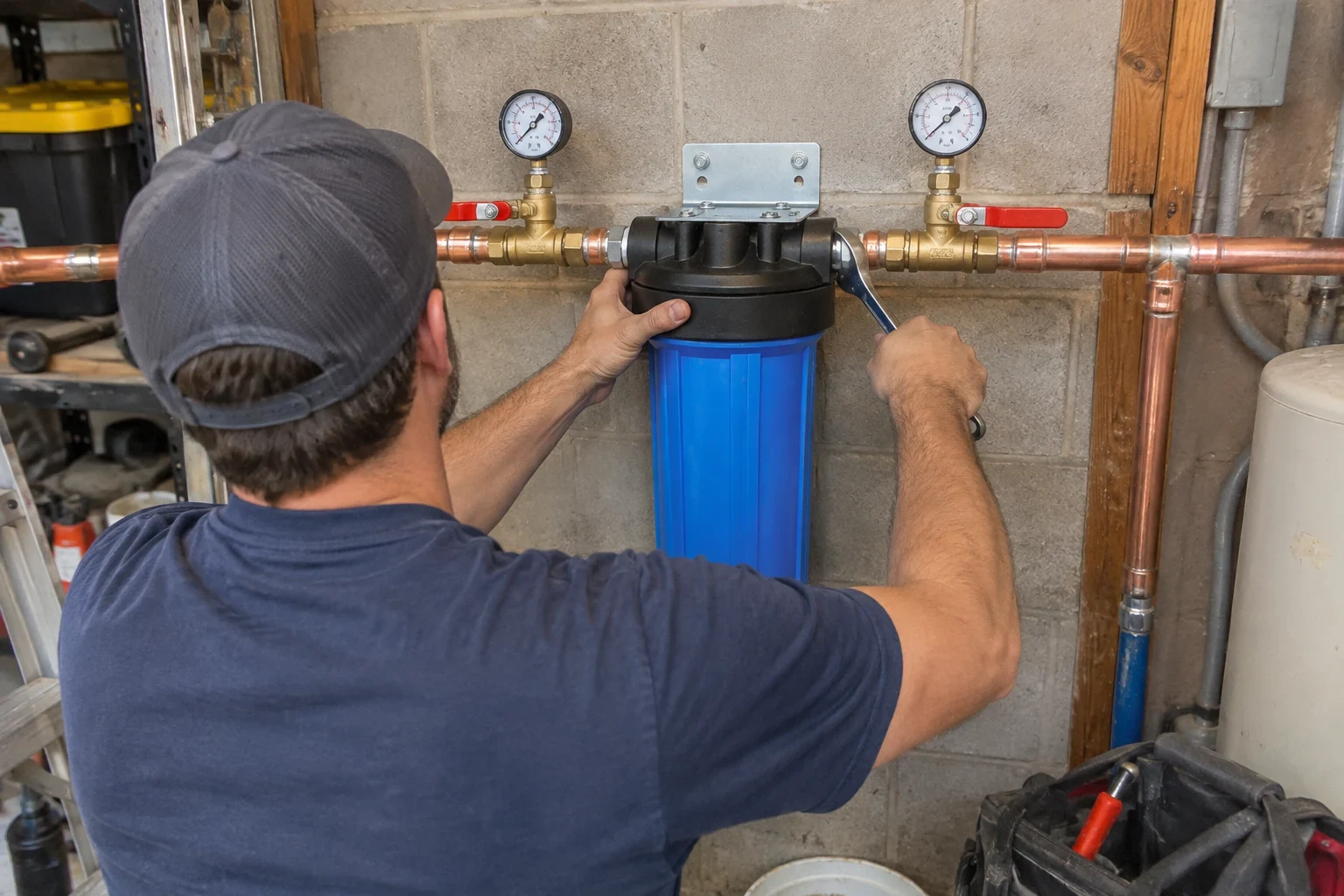
We start with a water test, then install filtration on the main supply line so your water heater, showers and faucets all draw from treated water. You see photos of the old connection, the new one and the gauge readings that confirm it works.
Filtered water at every tap, not just the kitchen
The equipment mounts on the main supply, close to the shutoff valve or wherever the line comes into the house. Water moves through a sediment stage and then a carbon or specialty media tank before it reaches the water heater and fixtures. An under-sink filter serves one faucet. This serves the whole house.
The right setup depends on what is actually in your water. City water around Tullahoma tends to call for chlorine taste and odor control, while private wells can bring iron, sulfur smell or sediment. We test before we recommend anything, and we tell you plainly when a simpler filter will do the job.
We document each stage of the job. You get photos of what we found at the main, the new plumbing as it goes in, and the pressure readings before and after, so you know exactly what is in your home.
What the work includes
A water test before any recommendation
We check hardness, chlorine, iron and pH at your tap and talk through what you notice day to day. The results decide the equipment, not a stock package.
Sizing to your flow
A filter that is too small chokes your pressure when two showers run at once. We size the system to your bathrooms, fixtures and pipe diameter so flow stays steady.
Installation at the main with a bypass
We cut in at the main line with proper fittings, shutoff valves and a bypass loop. The bypass lets you change filters or service the tank without leaving the house dry.
Pressure gauges and a clean flush
Gauges on either side of the filter show when a cartridge needs changing. We flush the new media until the water runs clear before we hand it over.
A photo record and filter schedule
You receive pictures of the finished install and a simple schedule for cartridges or media, written for your system and the amount of water your home uses.
Signs your home could use whole-house filtration
Chlorine taste or smell
If the shower smells like a pool and drinking water tastes flat, a carbon stage removes most of it at the source.
White scale on fixtures and glass
Crusty aerators, spotted shower doors and a kettle lined with white buildup point to hard water. Scale also shortens the life of water heaters and dishwashers.
Orange or brown staining
Rust-colored rings in toilets and sinks usually mean iron, common with well water. It stains laundry and builds up inside fixtures.
A rotten egg odor
A sulfur smell, especially from hot water, often comes from hydrogen sulfide in a well. It needs a specific treatment media, and we will say so.
Grit in aerators and filters
Sand or silt clogging faucet screens and appliance inlets means sediment is moving through your lines. A sediment prefilter catches it first.
A new tankless heater to protect
Tankless units are sensitive to scale. If you are planning tankless water heater installation, filtering or conditioning the supply first helps the heat exchanger last.
How a filtration job runs
- 1
Walkthrough and test
We look at where your main enters, check the space around it and test the water. We point out the condition of the existing connection so you see what we are working with.
- 2
Written estimate
We explain what the test showed, what system we recommend and why, with a line-item estimate. If the issue only affects one faucet, we tell you that too.
- 3
Install day
Water is off for a few hours while we cut in the system, valves and bypass. We protect the floor around the work area and photograph the plumbing before it is closed up.
- 4
Flush, test and hand over
We flush the system, retest the water and record pressure readings. You keep the test results, the readings and the maintenance schedule, and we clean up before we leave.
What sets the price
Filtration pricing swings more than most plumbing work because the equipment follows the water. After testing it and looking at the main, we write up an estimate that lists each part. Payment can be made with all major credit cards and cash, and financing options are offered too.
- What the water contains
- Chlorine alone needs a carbon stage. Iron, sulfur or heavy hardness need additional media tanks or a softener, which adds equipment and space.
- Flow and household size
- More bathrooms and higher demand mean a larger tank and larger fittings to keep pressure where you want it.
- Access at the main
- A main in an open garage is simpler than one in a tight crawlspace or behind finished walls. Some homes need the line rerouted a short distance to fit the system.
- Ongoing filter costs
- Cartridge size and media type set what you spend on replacements each year. We walk you through that before you choose, so there is nothing unexpected later.
Water filtration questions
Something not covered here? (931) 330-7739
Will filtering the whole house reduce pressure at my showers?
With correct sizing, the drop is small and steady, and most people never notice it. Trouble starts when the unit is too small for the house or a cartridge is long past due. The gauges on either side of the filter tell you when that is happening, well before it becomes a weak shower.
Is this the same as a water softener?
No. Filters remove things like chlorine, sediment, iron and odors. A softener removes the minerals that cause scale. Many homes need one or the other, and some need both, which is why we test first.
How often do filters need changing?
The sediment cartridge is the one you will swap most, usually a few times a year, and sooner if your supply carries a lot of sand or silt. Carbon and media tanks go much longer between changes. We write out a schedule that fits your equipment and how much water your household runs through it.
Does it work on well water?
Yes, though well water usually needs different treatment than city water. Iron, sulfur and sediment are common with wells, and we choose media that targets what your test shows.
How long is the water off during installation?
Most installs keep the water off for a few hours. We tell you the expected window when we schedule, and the bypass valve means future filter changes take minutes, not an afternoon.
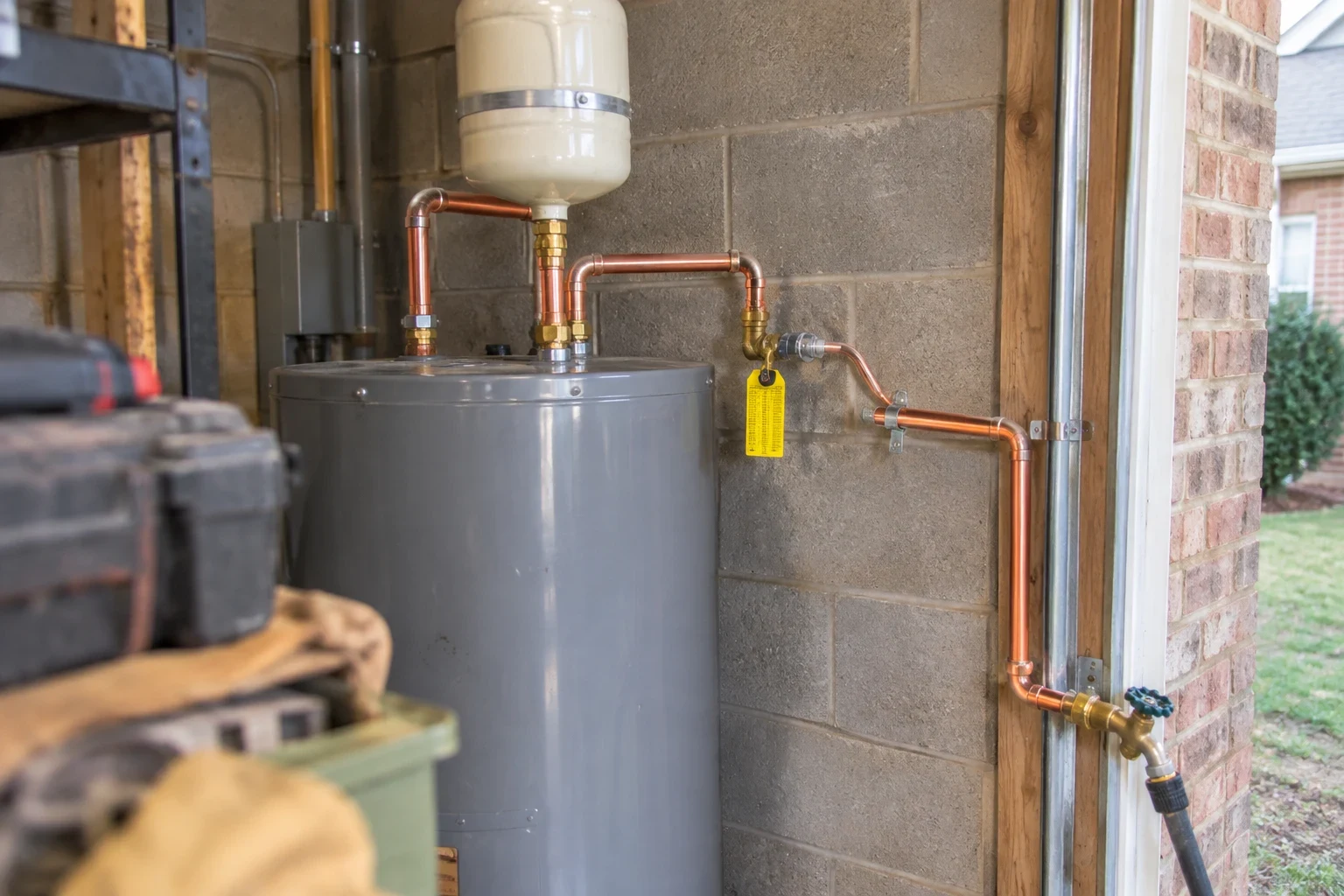
Find out what is in your water
We will test it, show you what we find and recommend only what your home needs. The estimate is free, and the photos are yours to keep.